Why Drinking More Water Isn't Fixing Your Fatigue
I used to think I was hydrated because I drank water all day.
Meanwhile I was waking up with stiff knuckles and stiff knees, working long shifts in a hot kitchen with no windows, sweating out more than I was putting back in. The water was going in. The hydration wasn't happening.
Here's the truth that changed everything for me: hydration is not about water. It's about electrolytes.
Electrolytes are what let oxygen move through your system and let minerals get transferred to where they need to go. Circulation is the point. The water is just the vehicle. You can pour water into a body all day, and without the electrolytes to activate it, you're washing minerals through instead of delivering them.
So let me give you my whole hydration system, the same one I run every day and hand to clients.
Step One: Fix the Water Itself
Water is one of the most compromised things we consume. Microplastics in bottled water. Pesticides and agricultural runoff. Pharmaceuticals. Fluoride. Chlorine. Before we even talk about how much to drink, we have to talk about what you're drinking.
At home, I use the Alkanatur pitcher. It purifies and alkalizes at the same time, removing over 200 contaminants while infusing the water with 18 mg of plant-source magnesium per liter. I use it for everything, drinking and cooking, and over time it costs less than bottled water without the microplastics.
We filter the showers too. Breathing in the chlorine and fluoride from one hot shower can add up to more than a glass of chlorinated water. Skin, hair, nails, and everything downstream feel the difference.
And on the road? If you have to buy water at a gas station or airport, Fiji is honestly one of the best widely available options. I have real problems with how that business operates in Fiji itself, and I'll say that plainly. But on pure water quality at a convenience store, it's hard to beat.
Step Two: Activate It With Electrolytes
This is the step almost everyone skips, and it's the whole reason "drink more water" fails so many people.
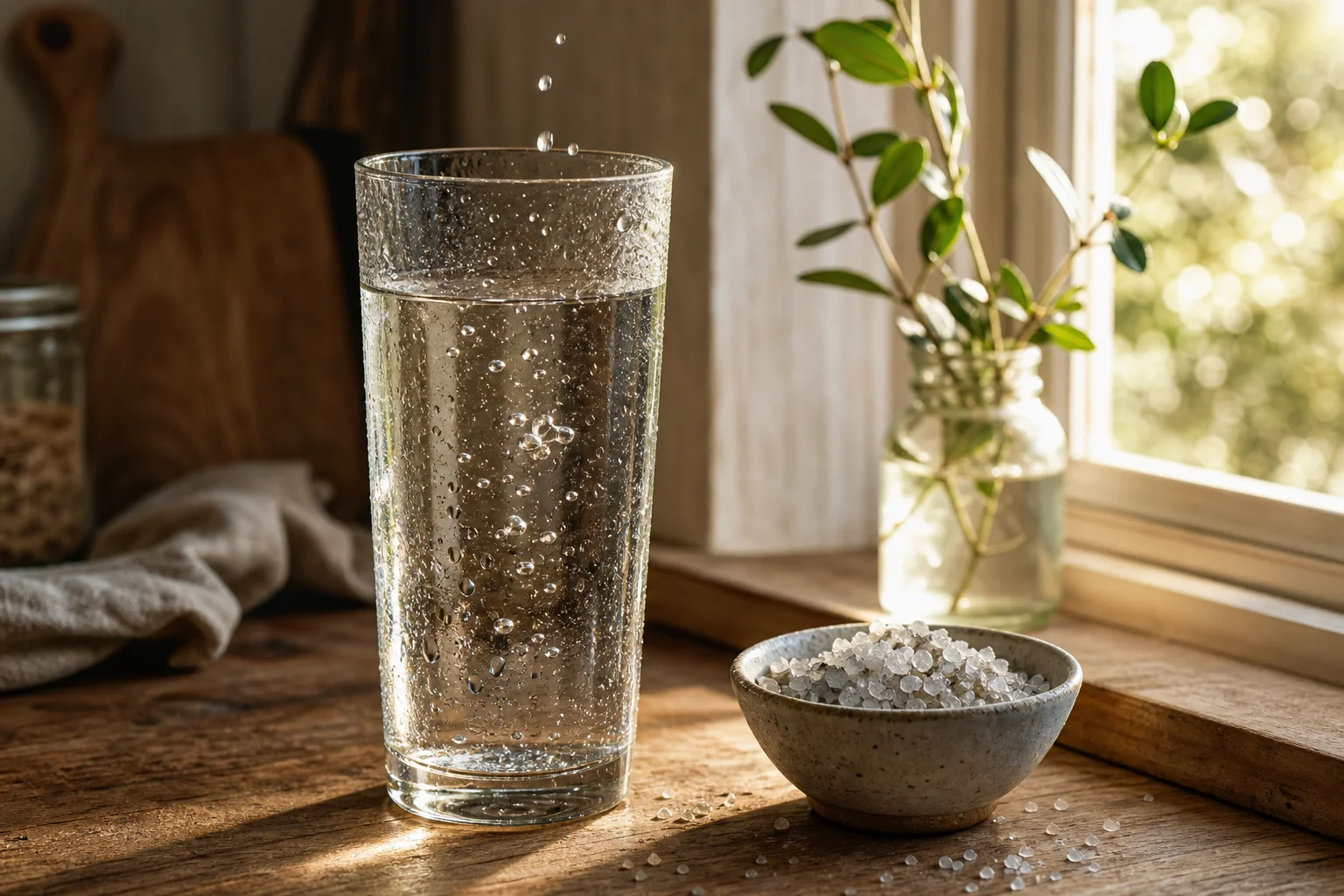
Add a pinch of sea salt to your glass. That small move supports your electrolytes, and electrolytes are what turn water into hydration. They carry the charge that moves oxygen and shuttles minerals into place. Without them, you're just flushing.
This is also why minerals and hydration travel together as my two non-negotiables. Water delivers, minerals build. I take three Cell Support every morning right after my Morning Ritual Tea, and the full system behind that is in the easiest way to get all your daily minerals.
Step Three: Hit Your Number
Half your body weight in ounces. That's the rule of thumb I give everyone as a daily minimum, and honestly it's probably a little more. A 180-pound person is looking at 90 ounces minimum before we round up.
I use a smart water bottle that pings my phone and spins a light at the base when it's time to drink. Sounds like a gimmick until you realize you haven't gone a day under-hydrated since you got it. Whatever your version of that is, a marked bottle, a phone alarm, a glass every hour on the hour, build the reminder into your day so the number takes care of itself.
Step Four: Eat Your Water
Some of the best hydration never touches a glass.
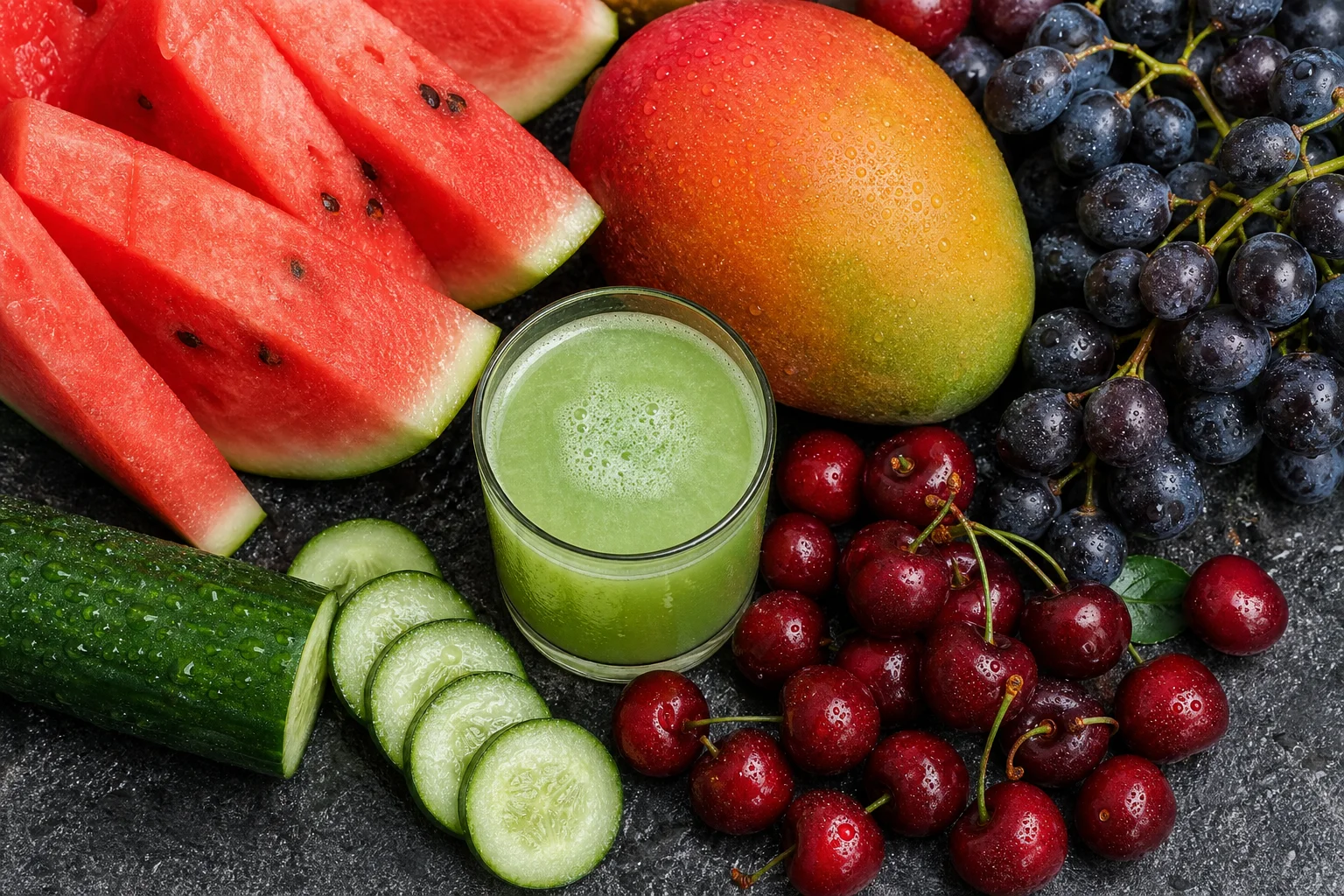
Watermelon. Mango. Seeded grapes. Cherries. Coconut water. Water-rich fruits carry their own hydration in with them, and they show up with minerals attached.
And here's a chef trick for when watermelon is out of season: juice a whole cucumber, skin and all. Cucumbers are related to watermelons, nearly the same flesh without the sweet taste, and the skin gives you a little chlorophyll on top. It's one of the most hydrating things you can pour into a body.
The Fatigue Connection
Why does all this matter for how you feel at 2pm?
Because a dehydrated body will beg for a stimulant every time. When circulation drops and minerals aren't moving, the tiredness rolls in, and most people answer it with coffee, which borrows energy instead of building it. I watched that cycle burn out my own energy in my kitchen years, and I wrote about the way off that treadmill in how to quit coffee without the crash.
Get the water right, activate it with electrolytes, hit your number, and eat your water, and a lot of that afternoon fog starts lifting on its own. Not with a surge. Just quietly, the way real energy shows up.
Start Here
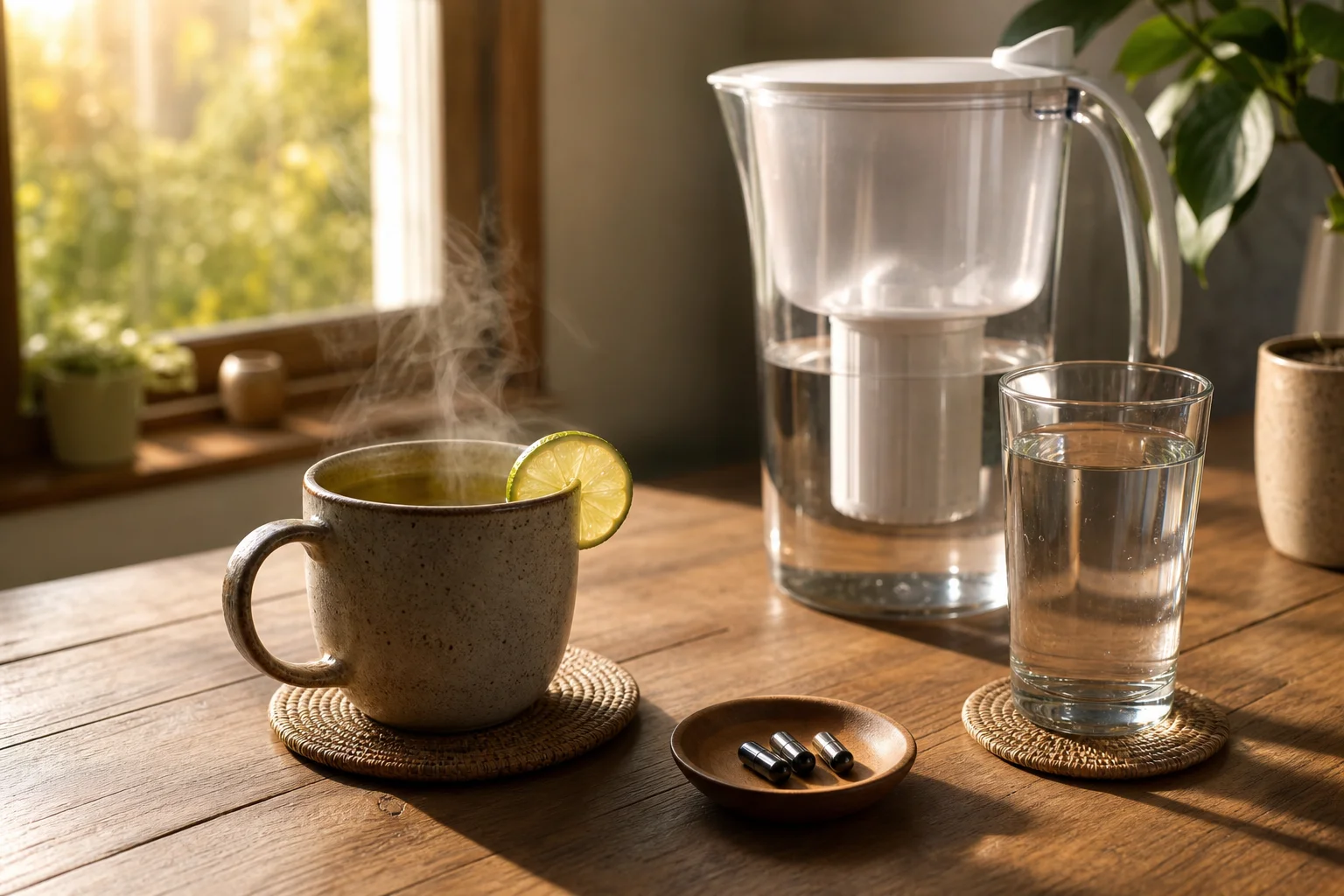
Tomorrow morning, before anything else: a warm cup of Morning Ritual Tea, then your minerals, then a tall glass of clean water with a pinch of sea salt. That's the Morning Ritual Bundle way in, and it front-loads hydration and minerals before your day can get to you.
And if you've been drinking plenty of water and still feel dry, stiff, or tired, book a free one-on-one consultation and we'll figure out where the system is leaking.
Water is the vehicle. Electrolytes are the driver. Minerals are the cargo. Make sure all three show up.
Frequently Asked Questions
How much water should I drink a day?
A simple rule of thumb is half your body weight in ounces as a daily minimum, probably a little more, plus water-rich foods like watermelon, mango, seeded grapes, cherries, and coconut water.
Why am I still tired even though I drink a lot of water?
Hydration is really about electrolytes and circulation, not just water. Without electrolytes, water can't move oxygen and minerals to where they need to go, so adding a pinch of sea salt and daily minerals matters as much as the water itself.
Is bottled water bad for you?
Bottled water can carry microplastics and other contaminants, which is why a purifying, alkalizing pitcher at home is often a cleaner and cheaper long-term option. When buying on the road, Fiji is one of the better widely available choices.
What can I drink to hydrate besides water?
Coconut water, juiced whole cucumber, and water-rich fruits are all strong hydrators. Cucumbers are related to watermelons and juicing the whole cucumber with the skin adds a little chlorophyll too.
Written by My Cell Support