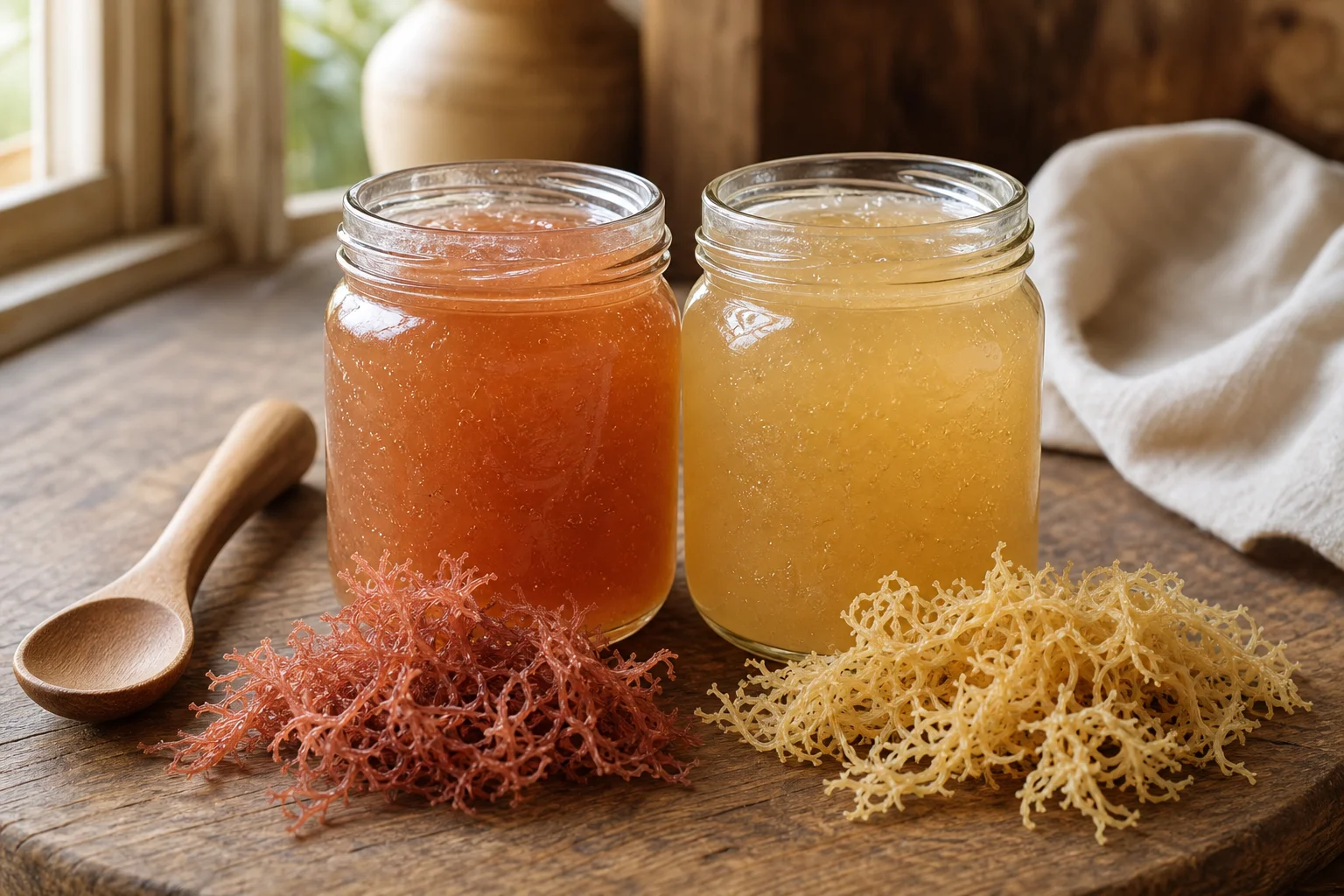
Three Things to Look For Before You Buy Sea Moss
Sea moss went from something my grandmother's generation knew about to something sold in every corner of the internet, and the shelf got crowded fast.
Most of it is not fake. A lot of it is just grown in a way that has very little to do with how the plant actually lives. Here are the three things I check, and I would check them no matter whose jar you are holding.
One: Where It Actually Comes From
Not "the Caribbean." Not "the islands." A real, named harvest location.
Vagueness on a label is almost always doing work for somebody. If a seller cannot tell you what body of water their moss came out of, that is the answer.
The two sources I pay attention to are the cold North Atlantic, off the northeastern United States and Canada, and specific wild-harvest locations in warm water like Honduras. What I would be careful with is the enormous volume of moss coming out of St. Lucia and Grenada, not because those are bad places, but because a very large share of what ships from there is farmed on lines rather than harvested from the wild.
Two: How It Grew
This is the one almost nobody asks about, and it is the one that matters most.
Sea moss in the wild anchors to rock, in water that is constantly moving. Current, tide, surge. That movement is the whole environment the plant developed in, and it grows slowly in it.
Farmed moss is usually grown on ropes or nets strung in a sheltered bay, where the water is calm and the plant grows fast. That is a legitimate industry and there is nothing sinister about it. But fast growth in still water is not the same thing as slow growth on rock in moving water, and I would rather have the second one.
So ask: was this wild-harvested, or was it grown on lines. Ours is wild-harvested, not line-grown.
Three: How Much Salt Is On It
Pick up the bag and look at it.
Sea moss comes out of the ocean, so some natural salt is normal and expected. What you are watching for is a heavy white crust, moss that looks like it was dredged in it.
That can be a sign the moss was soaked in a brine solution rather than simply rinsed and dried. Salt adds weight, and weight is what you pay for. Excess salt is not how the plant comes out of the water.
Irish and Honduran Are Not the Same Plant
This gets muddled constantly, including by people selling it, so let me be clear about it.
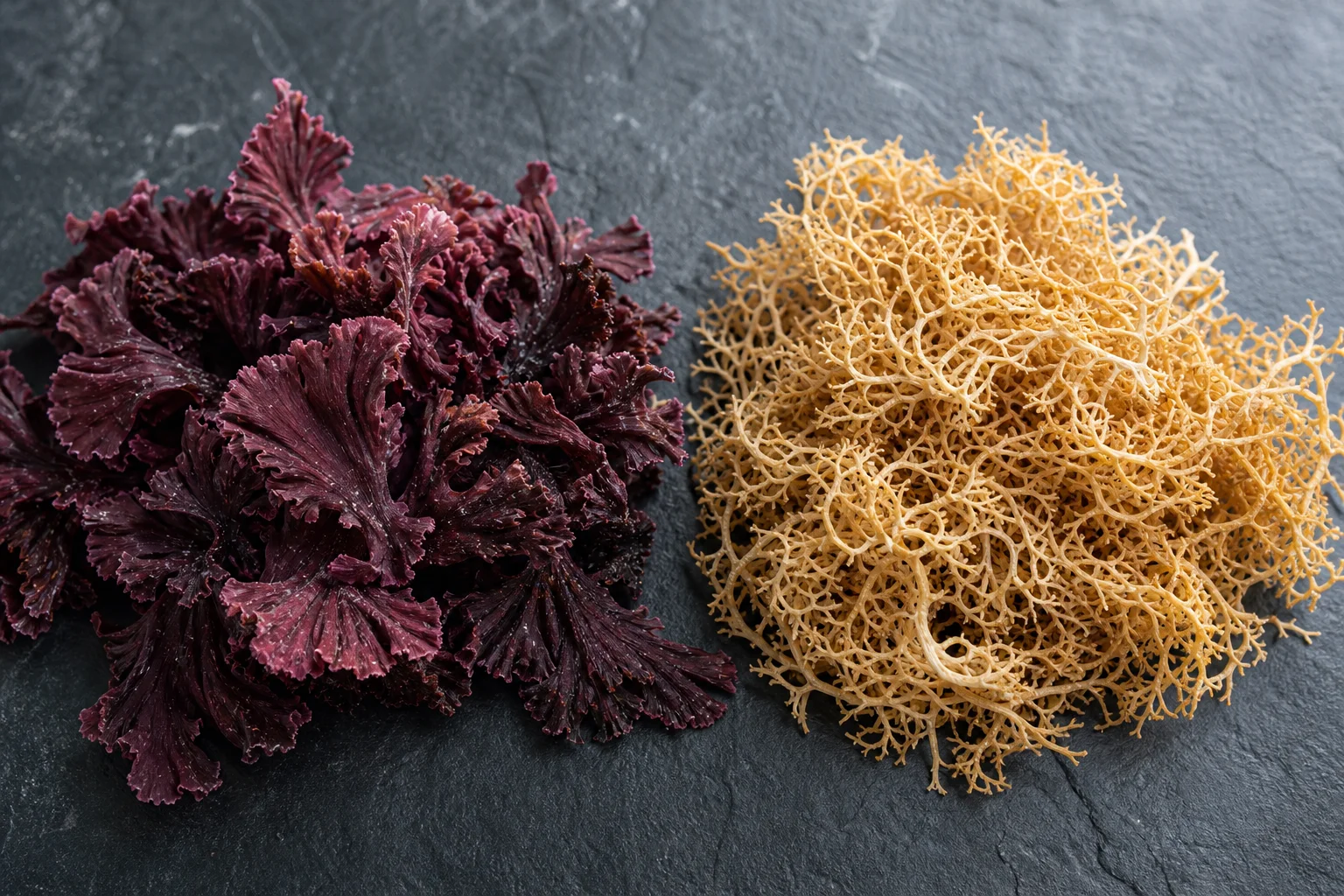
Irish sea moss is Chondrus crispus. A cold-water species that grows along the North Atlantic, on the rocky coastlines of the northeastern United States, Atlantic Canada, and Ireland. It anchors to rock, it handles cold water and hard tides, and it is difficult to farm on ropes, which is a large part of why most of it is still wild-harvested.
Honduran sea moss is a warm-water species. Different genus, grown in tropical water, and it is the family most of the world's sea moss actually comes from.
They are cousins, not the same plant at different temperatures. Both are mineral-dense red algae. Both gel. Both disappear into food without a trace. They differ in color, in texture, in how firmly they set, and in the mineral profile the water around them handed over.
Anyone telling you one of them is the only real sea moss is usually telling you which one they happen to sell.
What I Keep in My Own Kitchen
Both.
Irish Sea Moss for the cold-water, rock-grown, North Atlantic version. Honduran Sea Moss for the warm-water side. I rotate them, because I would rather pull from two different water environments than assume one of them has everything.
If you want to try them against each other, pick up one bag of each and rotate them week to week.
And if a jar of gel in the fridge is not realistic for your week, Cell Support carries sea moss in capsule form alongside its botanical family. Same habit, different uniform.
The Short Version
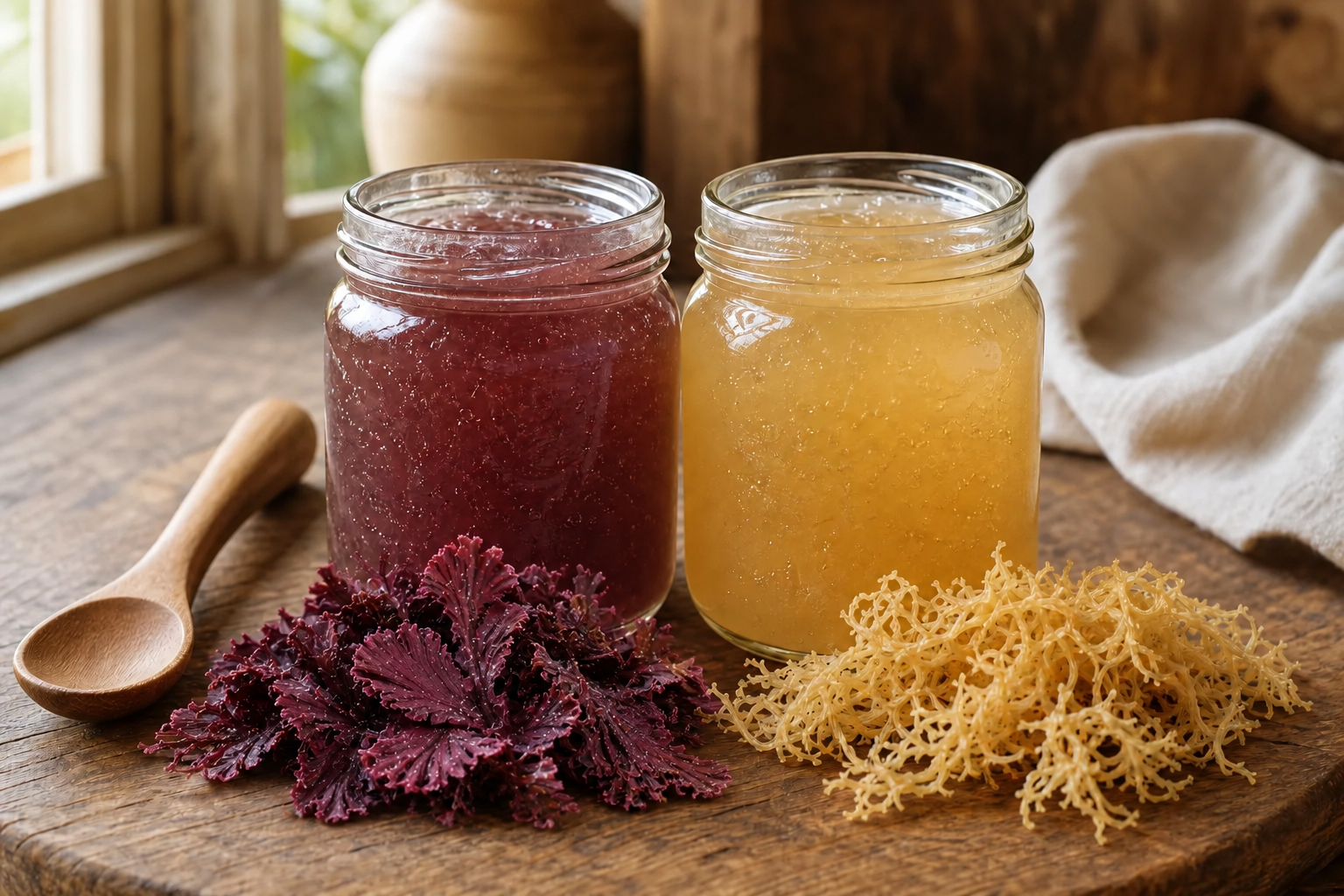
Named origin. Wild-harvested rather than line-grown. No heavy salt crust.
Three questions, and a seller who cannot answer all three has told you something useful anyway.
For how I actually use it once it is in the fridge, and why minerals matter more now than they did a generation ago, start with the easiest way to get all your daily minerals.
Frequently Asked Questions
What is the difference between Irish sea moss and Honduran sea moss?
Irish sea moss is Chondrus crispus, a cold-water species from the North Atlantic that grows on rocks. Honduran sea moss is a warm-water species from tropical waters. Both are mineral-dense red algae used the same way in the kitchen, but they are different plants with different color, texture, and gel behavior.
Is pool grown or line grown sea moss bad?
It is not dangerous. It is grown fast on ropes in sheltered water rather than slowly on rock in moving water, and that is a different growing environment from the one the plant evolved in.
Why is some sea moss covered in salt?
A light natural salt is normal from sea water and drying. A heavy white crust can be a sign it was soaked in brine, which adds weight and is not how the plant comes out of the ocean.
Where does the best sea moss come from?
Look for a named harvest location rather than a region. Cold North Atlantic waters off the northeastern United States and Canada, and specific wild-harvest sources in warm water, are the two to ask about.
Written by My Cell Support