Spinach has the best publicist in produce.
It earned that reputation in different soil, decades ago, and it has been coasting on it ever since. I am not telling you spinach is bad. I am telling you that if greens are the move, and they are, then you might as well reach for the ones that still show up loaded.
Here is what is actually in my kitchen.
The Roster
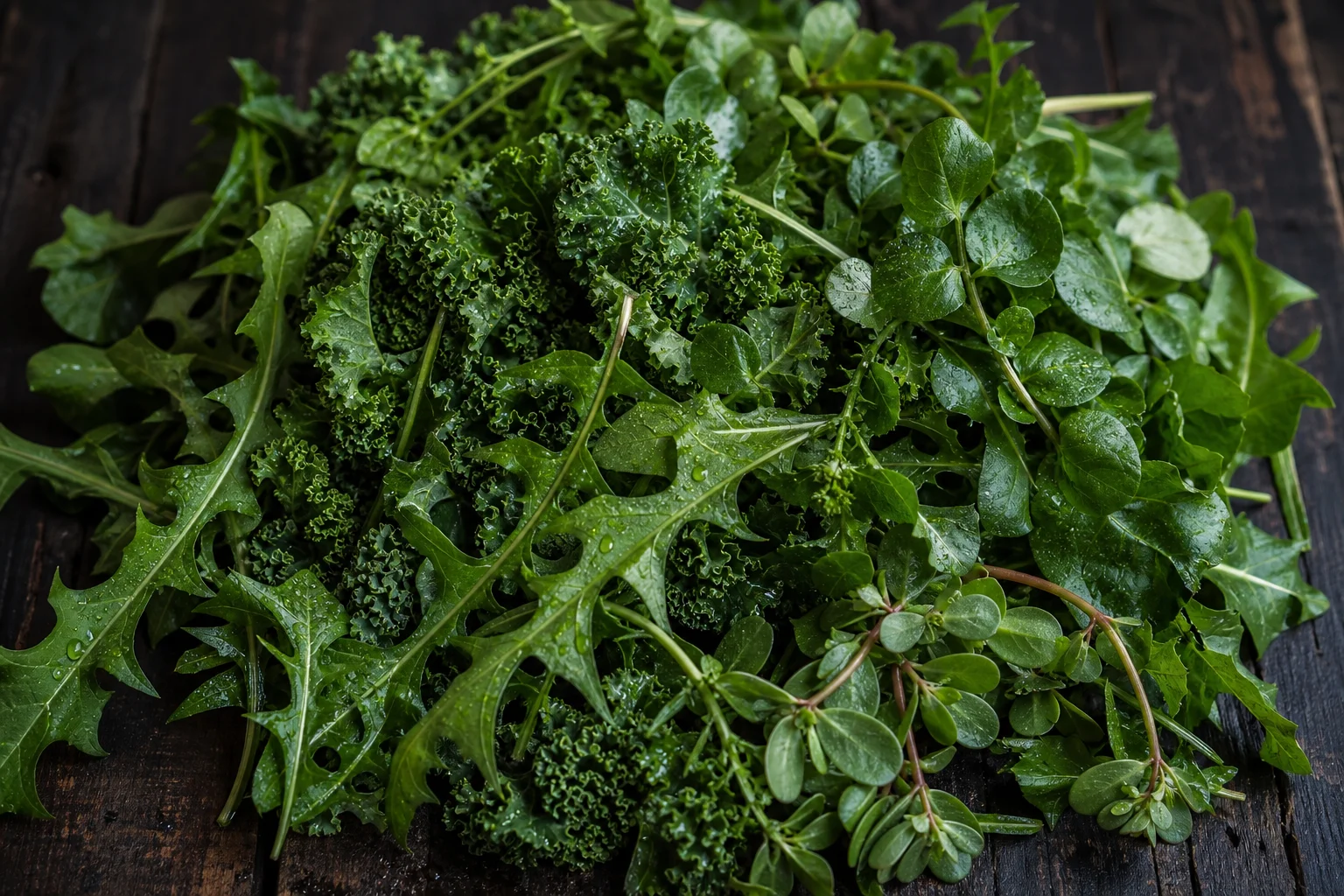
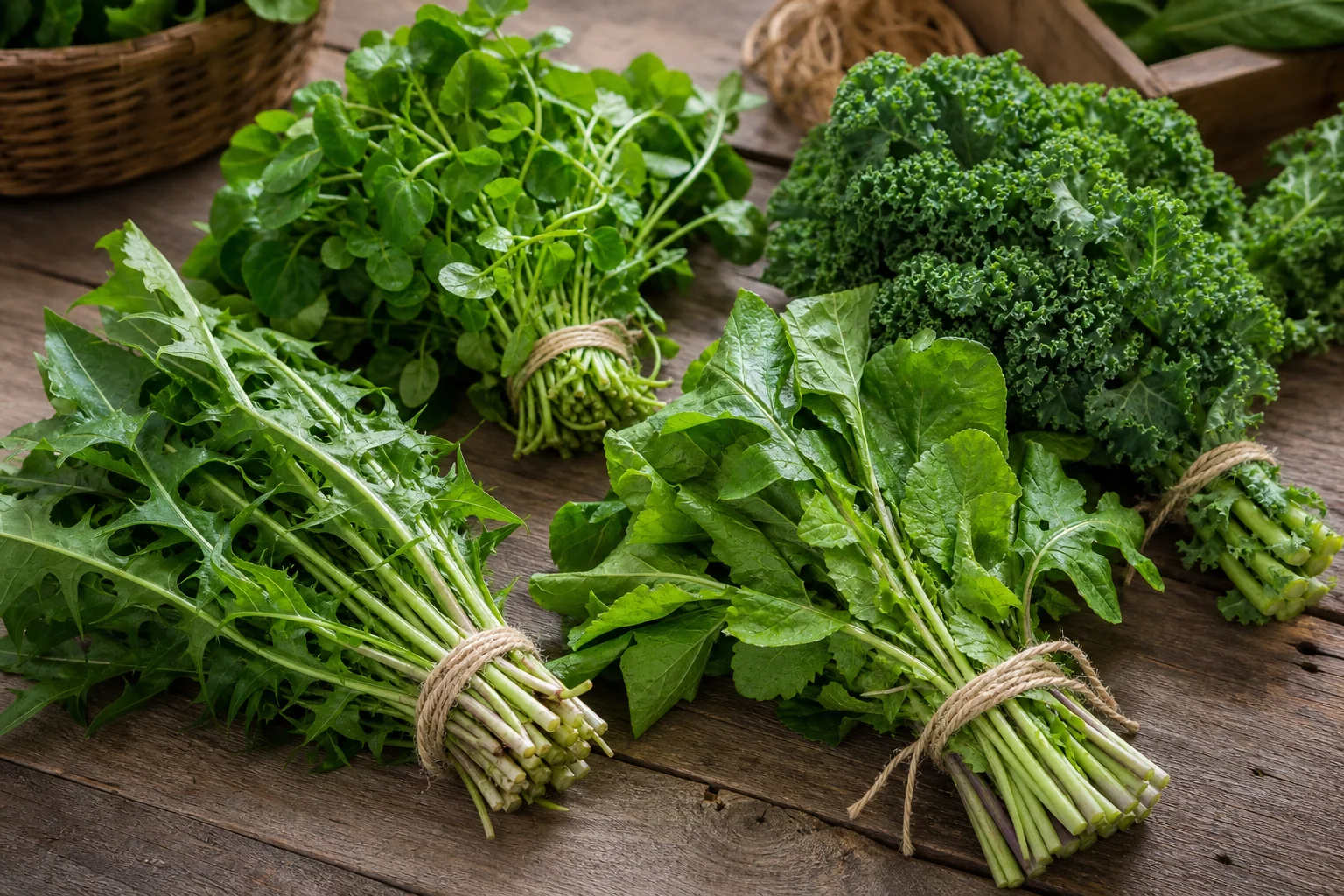
Dandelion greens. The one I would put first. Deeply bitter in the best way, high chlorophyll, and they grow like a weed because they are one. Young leaves go in salads. Older, bigger leaves want heat.
Turnip greens. Southern kitchens have known about these forever. They cook down beautifully and they have real backbone.
Watercress. Peppery, delicate, and it belongs in the same conversation as the botanicals I lean on for daily minerals. It wilts into a warm dish in seconds.
Purslane. Most people pull it out of the sidewalk and throw it away. It is succulent, slightly lemony, and it is genuinely one of the better things you can put in a salad.
Poke salad. Traditional, regional, and it has to be prepared properly, which is exactly why it stayed in the families who knew how rather than showing up in supermarkets.
Kale. Yes, still. It became a punchline because of how people cooked it, not because of what is in it.
Why the Soil Argument Matters Here
The reason I keep pushing people toward the stronger greens is the same reason I push minerals generally: decades of chemical fertilizer left the ground thinner than it was, so the same vegetable is not carrying what it used to carry. That whole story is in the easiest way to get all your daily minerals.
You cannot fix depleted soil at the dinner table. What you can do is choose plants that were never bred toward mildness in the first place. Bitter is usually a sign that something is in there.
How to Cook Them So People Actually Eat Them
This is where most people lose. They boil a beautiful green into grey sadness, decide they do not like greens, and go back to iceberg.
Four things fix bitter greens: fat, acid, salt, and heat.
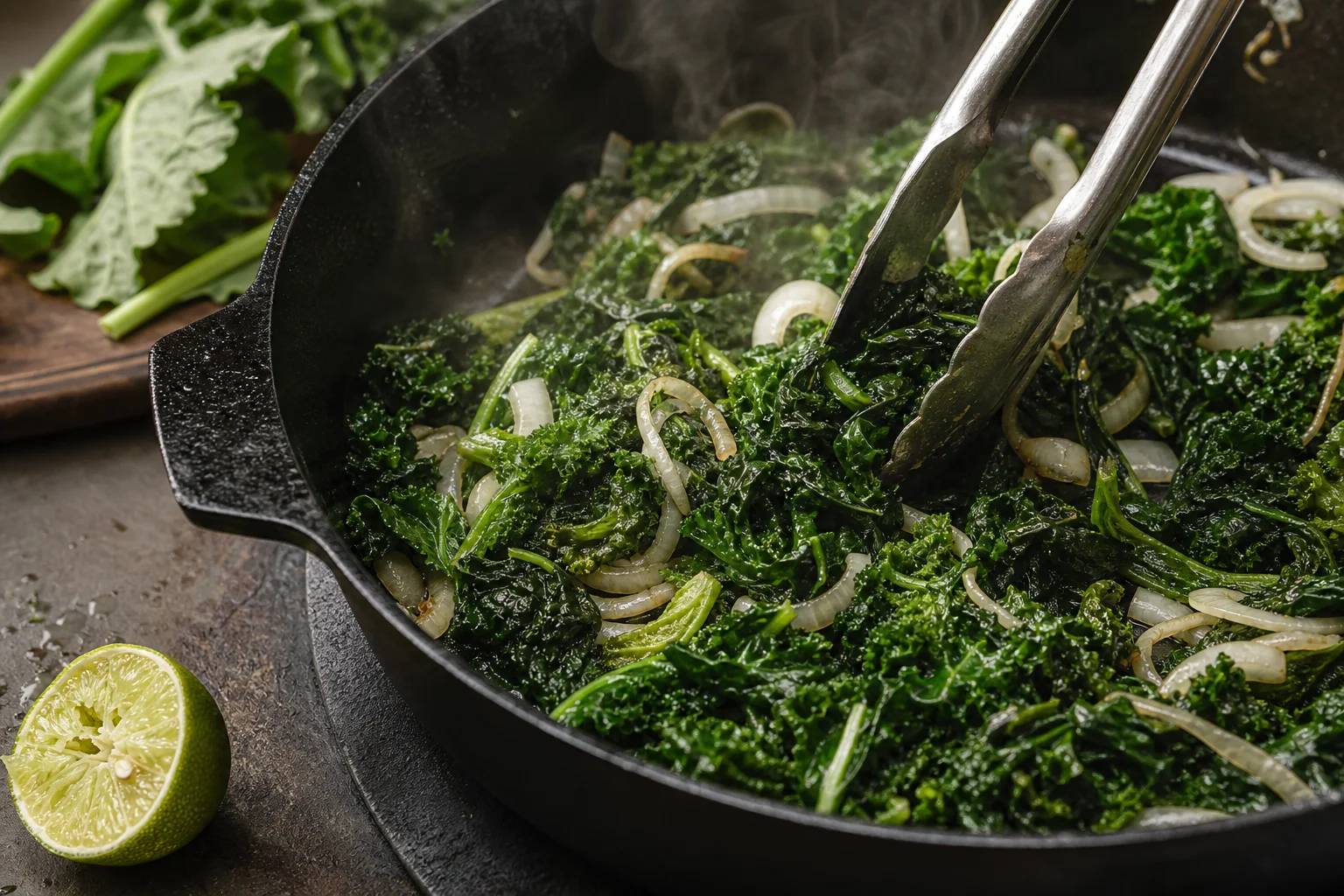
Fast and hot. A hot pan, a little oil, garlic or onion, greens in, tongs moving, done in two or three minutes. Not a twenty minute simmer.
Acid at the end. A squeeze of lime or lemon after the heat is off. This is the single biggest thing amateurs skip and it transforms the plate.
Salt properly. Sea salt, and season while cooking rather than after, so it works into the leaves.
Blanch the tough ones. For older dandelion or poke salad, thirty seconds in boiling water first takes the hard edge off without cooking the life out of it.
Hide them when you need to. A handful blended into a smoothie disappears entirely. Same principle as folding sea moss gel into the two minute mineral bowl. Nobody at the table has to know.
A Simple Rotation
Do not try to eat all six. Pick two a week and rotate so nothing gets boring.
Week one, dandelion and kale. Week two, turnip greens and watercress. Week three, whatever looked good at the market. That is the whole system, and it keeps the plate from turning into an obligation.
What Greens Cannot Do
I will be straight with you: even the strongest greens are still growing in the same tired ground as everything else. Better ground than spinach in a plastic clamshell, but not the ground our grandparents cooked from.
That is why I do not treat food and supplementation as competitors. My mornings still start with tea and three Cell Support before any food shows up, and the Morning Ritual Bundle is that first hour in a box. The greens are the foundation. The minerals fill what the foundation cannot reach anymore.
Start This Week
Buy one green you have never cooked. Dandelion is the best first move.
Hot pan, oil, garlic, two minutes, lime at the end, sea salt. Eat it standing at the stove like a chef does. If it tastes good, you will keep buying it, and that is the entire goal.
For the rest of the plate, the free Nutritional Guide is the map of what is helping and what is quietly working against you.
FAQ
What are the most nutrient dense leafy greens?
Dandelion greens, turnip greens, watercress, purslane, poke salad, and kale are the ones I reach for. They carry high chlorophyll content and have not been bred toward mildness the way some supermarket greens have.
Is spinach still good for you?
Spinach is fine, it is just not the powerhouse its reputation was built on. Rotating in stronger greens gives you more per bite.
How do you make bitter greens taste good?
Fat, acid, salt, and heat. A little oil, a squeeze of lime, sea salt, and either a quick blanch or a hot fast sauté rather than a long sad simmer.
Can you eat dandelion greens raw?
Yes, young leaves work in salads. Older, larger leaves are more bitter and do better cooked.
Written by My Cell Support